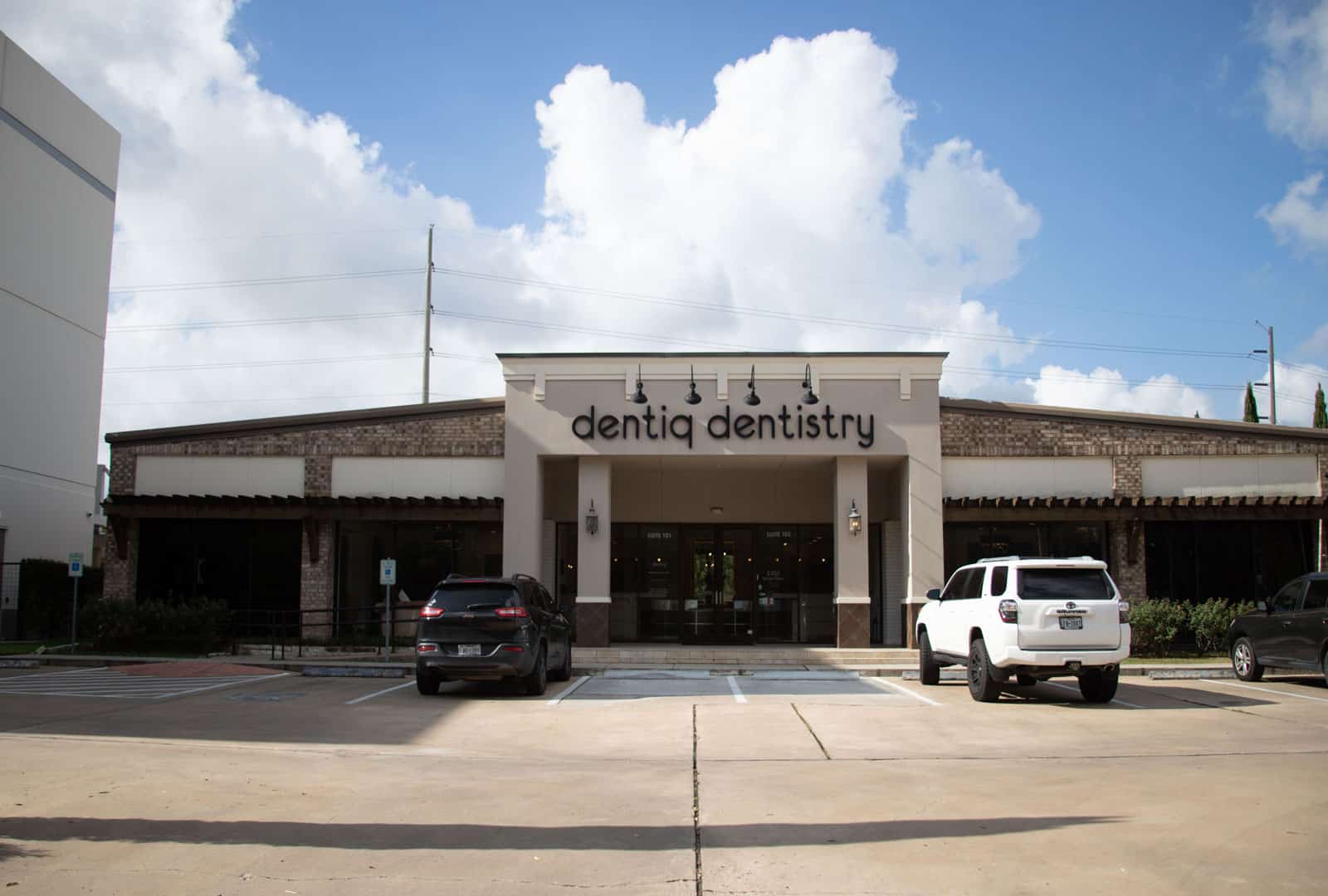
June 8, 2026 · Dentiq Dentistry
What Is Bone Grafting and Do You Need It Before a Dental Implant?
If you’re looking into dental implants and your dentist has mentioned bone grafting, you probably have questions—and maybe some hesitation. Here’s the short answer: a bone graft is a procedure that rebuilds lost jawbone so there’s enough solid foundation to support a dental implant. Not everyone needs one, but it’s common, and skipping it when it’s necessary almost guarantees implant failure. This article explains what bone grafting actually involves, why jawbone loss happens in the first place, how to know whether you need it, and what the process looks like from start to finish.
Why Jawbone Loss Happens—and Why It Matters for Implants
Your jawbone stays healthy and dense because tooth roots constantly stimulate it. Every time you bite or chew, that pressure travels through the root and signals the bone to keep regenerating. When a tooth is lost—whether from decay, gum disease, trauma, or extraction—that stimulation disappears. The bone beneath the empty space starts to resorb, meaning the body gradually reabsorbs the tissue because it no longer perceives a need for it.
The rate of bone loss varies, but studies consistently show that roughly 25% of bone width can be lost in the first year after an extraction, and the process continues for years afterward. This is why timing matters. Patients in Houston who wait two or three years after losing a tooth before pursuing an implant often have significantly less bone to work with than patients who act within the first few months.
A dental implant is essentially a titanium post that gets placed directly into the jawbone, functioning as an artificial root. For the implant to integrate properly—a process called osseointegration—there has to be enough bone volume in both height and width to hold that post stable while healing occurs. If the bone is too thin, too short, or too soft, the implant either can’t be placed at all or will fail over time.
What Bone Grafting Actually Is
Bone grafting is a surgical procedure that adds bone material to a deficient area of the jaw, encouraging your body to generate new, dense bone in that location. Once healed, the grafted area can support an implant just like naturally healthy bone would.
There are four main sources for graft material:
- Autograft – Bone taken from your own body, typically from the chin, jaw, hip, or shin. This is considered the gold standard because it contains living cells and carries no risk of rejection, but it does require a second surgical site.
- Allograft – Processed bone from a human donor (usually from a bone bank). It’s thoroughly sterilized and treated to remove cellular material, leaving behind a mineral scaffold that your body populates with new bone cells.
- Xenograft – Bone derived from an animal source, most commonly bovine (cow) bone. It’s processed similarly to allograft and has a strong track record in dental procedures.
- Alloplast – Synthetic materials such as hydroxyapatite or calcium phosphate that mimic the mineral structure of bone and act as a scaffold for new growth.
The right choice depends on the size of the defect, the location in your jaw, the timeline before implant placement, and sometimes personal preference. Your dentist will discuss which option makes sense for your specific situation.
Do You Actually Need a Bone Graft Before an Implant?
Not every implant patient needs a graft. Whether you need one depends on a clinical evaluation—typically including a 3D cone beam CT scan (CBCT) that measures the exact dimensions and density of your jawbone in the target area. There are a few common scenarios:
You probably don’t need a graft if you lost a tooth recently, have been wearing a dental bridge or partial that kept stimulation in the area, or happened to naturally have dense, wide bone in that location.
You likely do need a graft if you lost a tooth years ago and haven’t replaced it, you’ve had gum disease that eroded supporting bone, you had a tooth extracted due to infection or abscess (which often destroys local bone), or previous dental work caused bone loss.
Socket preservation grafts are a special category worth knowing about. When a tooth is extracted and the plan is to place an implant later, your dentist may perform a socket preservation graft immediately after removing the tooth—packing the empty socket with graft material before it’s closed. This dramatically slows or prevents the bone resorption that would otherwise occur during the months between extraction and implant placement. It’s a proactive step rather than a corrective one, and it can simplify the implant process significantly.
Sinus lift is another type of bone augmentation you may hear about. The upper back teeth sit close to the maxillary sinuses. When bone height in that area is insufficient, a sinus lift procedure creates space between the sinus floor and the jaw, then fills that space with graft material to build up height for implant placement.
What the Timeline Looks Like
One of the most common questions patients have is how much a bone graft adds to the overall treatment timeline. The honest answer is several months.
A straightforward bone graft typically requires 4–6 months of healing before the site is ready for implant placement. Larger grafts—such as block grafts used to rebuild significant defects—may require closer to 9–12 months. The healing period isn’t painful or disruptive once the initial surgical recovery is done; it’s simply the biological time your body needs to generate new bone.
The typical sequence looks like this:
- Evaluation and imaging (CBCT scan, examination)
- Bone graft procedure (usually outpatient, under local anesthetic with optional sedation)
- Healing period – 4 to 9+ months depending on graft size
- Follow-up imaging to confirm adequate bone volume
- Implant placement
- Osseointegration period – typically 3–6 months
- Crown placement – the visible part of the tooth
From start to finish, implant treatment with a bone graft can take anywhere from 9 months to well over a year. It’s a longer commitment than other tooth replacement options, but the outcome is a tooth that functions and feels like a natural one.
What to Expect at Dentiq Dentistry
At Dentiq Dentistry in Houston, the implant evaluation process starts with a thorough exam and 3D imaging to determine exactly how much bone is present and where. If a graft is needed, that’s discussed openly—what type of graft material is appropriate, how long healing will likely take, and how the graft phase fits into the overall implant plan before any commitments are made.
Bone graft procedures are typically done under local anesthetic. If you’re anxious about dental procedures, ask about sedation options at your consultation—there’s no reason to white-knuckle through a surgical appointment. Post-operative discomfort is usually manageable with over-the-counter pain relievers and any prescribed medication, and most patients return to normal routines within a few days.
The team at Dentiq will monitor your healing at scheduled follow-up appointments and use follow-up imaging to confirm the graft has matured before moving forward with implant placement. Nothing is rushed on the surgical side.
To schedule a consultation, visit the schedule page or call (713) 526-2904.
Frequently Asked Questions
Does bone grafting hurt? The procedure itself is done under local anesthetic, so you shouldn’t feel pain during it. Afterward, expect soreness and some swelling for a few days—similar to what you’d feel after a tooth extraction. Most patients manage discomfort with ibuprofen or acetaminophen, sometimes combined with a short course of prescribed medication.
Can I get a dental implant without a bone graft even if my bone is thin? In some cases, alternatives like narrow-diameter implants or zygomatic implants (which anchor into the cheekbone rather than the jaw) may be options. However, these are not universally appropriate. A CBCT scan and consultation is the only way to know what’s viable for your specific anatomy.
How long does a bone graft last—do I have to worry about it “wearing out”? Once a bone graft has fully integrated—meaning your body has replaced the graft material with your own living bone—it behaves like natural bone. It doesn’t “expire.” It can, however, continue to resorb if stimulation is absent for a prolonged period, which is one more reason to proceed with the implant once healing is confirmed.
Is bone grafting covered by dental insurance? Coverage varies significantly by plan. Some dental insurance plans cover a portion of bone grafting when it’s deemed medically necessary; others classify it as a non-covered service. It’s worth getting a predetermination from your insurance carrier before treatment so you know what to expect financially.
What happens if I skip the bone graft and get an implant anyway? Placing an implant in insufficient bone significantly increases the risk of implant failure—the implant may not integrate properly, may become mobile, or may eventually be rejected by the body. In most cases, a failed implant also results in further bone loss, making future attempts more complicated. If your provider says a graft is needed, that recommendation is based on measurable bone volume, not a judgment call.